
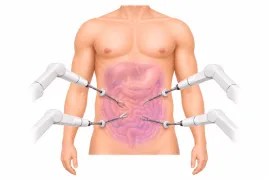
Robotic Surgery
Robotic-assisted surgery is a type of minimally invasive surgery. The surgeon operates through small cuts using thin instruments attached to robotic arms, and controls them from a console in the operating room. A camera gives a magnified 3D view of the area being operated on. The robot does not act on its own; every movement is made by the surgeon.
How is robotic-assisted surgery done?
Small cuts
A few small cuts are made, and a camera and instruments are passed through them.
Surgeon at the console
The surgeon sits at a console in the operating room and controls the instruments, which follow the surgeon's hand movements.
Magnified view
The camera shows a magnified 3D view of the area, which helps when working in tight spaces such as the pelvis.
Team at the bedside
An operating team stays next to the patient throughout the operation.
Where robotic-assisted surgery may be used
In some centres, robotic-assisted techniques are used for selected operations for these cancers. The choice between open, laparoscopic and robotic surgery depends on the cancer, its stage, your health and what the hospital offers.
Colorectal and rectal cancer
Surgery for colon and rectal cancer, where the robot's view and instruments can help in the narrow pelvis.
Gynecological cancers
Selected operations for cancers of the uterus, cervix and ovary.
Urological cancers
Selected operations for prostate, kidney and urinary bladder cancer.
Chest cancers
Selected operations for lung and esophageal (food pipe) cancer.
Stomach and abdominal cancers
Selected operations for stomach cancer and some other abdominal tumours.
Head and neck cancers
Transoral robotic surgery for selected tumours of the throat, done through the mouth.
Possible benefits and limitations
Compared with open surgery, robotic-assisted surgery may offer some patients:
- Smaller cuts and smaller scars
- Less blood loss
- Less pain after surgery
- A shorter hospital stay
- An earlier return to daily activities
These are possible benefits, not promised results, and they vary from patient to patient. Robotic surgery is not suitable for every patient or every cancer. It carries the usual risks of surgery, such as bleeding, infection and the effects of anaesthesia, and the surgeon may need to change to laparoscopic or open surgery during the operation. It may also cost more than other approaches.
How to prepare for robotic surgery
Educate yourself
Learn about the specific surgery you will undergo, including the procedure, potential risks, benefits, and expected recovery process. Consult with your healthcare provider and ask any questions or concerns you may have.
Follow preoperative instructions
Your surgeon and healthcare team will provide specific instructions to prepare for surgery. This may include restrictions on eating or drinking before the procedure, as well as guidelines regarding medications, such as blood thinners, that may need to be temporarily stopped.
Communicate with your healthcare team
Inform your healthcare team about any existing health conditions, medications, or allergies you may have. They can provide guidance on whether any adjustments need to be made prior to surgery.
Arrange support
It can be helpful to have someone accompany you to the hospital for surgery and to stay with you during the initial recovery period. They can provide emotional support and assist with daily activities as needed.
Lifestyle adjustments
In the days leading up to surgery, focus on maintaining a healthy lifestyle. This includes getting sufficient rest, eating a balanced diet, and avoiding smoking and excessive alcohol consumption, as these factors can affect your body's ability to heal.
Prepare your home
Before surgery, ensure your home is clean and organized, making it easier for you to move around comfortably during the recovery phase. Consider arranging commonly used items at waist level or within easy reach to minimize strain on the surgical site.
Arrange transportation
You will likely be advised not to drive immediately following surgery, so arrange transportation to and from the hospital. If necessary, make arrangements for someone to pick up any prescribed medications on your way home.
Follow fasting instructions
Typically, you will be instructed to refrain from eating or drinking anything after midnight on the night before surgery. This is to ensure an empty stomach during the procedure.
Post-surgery arrangements
Plan for the post-surgery period by organizing any necessary medical supplies, such as wound dressings or medications, as instructed by your healthcare team. Arrange follow-up appointments to monitor your progress and discuss any further treatment or medications.

Surgical Oncologist in Ahmedabad
Dr Manthan Merja
MBBS, MS (General Surgery), MCh (Surgical Oncology)
Reg. No.: G-50447 (Gujarat Medical Council)
Dr. Manthan Merja is a consultant surgical oncologist in Ahmedabad, practising at the clinic in Gota. He provides evaluation and surgical treatment for cancers including breast cancer, lung cancer, colorectal cancer, and gastric cancer.
Treatment plans are discussed according to each patient's condition, and results vary from patient to patient.
FAQ About Robotic Surgery
General information only. Please consult a doctor about your own condition.
Need help finding information?
Contact the clinic for appointment details and directions.
Contact the clinicDoes a robot perform the operation?
No. The surgeon controls every movement of the instruments from a console. The robotic system holds and moves the instruments as the surgeon directs.
Is robotic surgery suitable for everyone?
No. It depends on the type and stage of cancer, your general health and any earlier operations. After evaluation, the doctor explains whether robotic, laparoscopic or open surgery is suitable for you.
Is recovery faster after robotic surgery?
Some patients go home sooner and return to daily activities earlier than after open surgery, but this is not the case for everyone. Recovery depends on the operation, your health and any further treatment you need.
Consult for Robotic Surgery
Consultation is by appointment. Whether robotic surgery is suitable is explained after evaluation, according to each patient's condition.